
Mindful Internal Arts
Training & Exercises
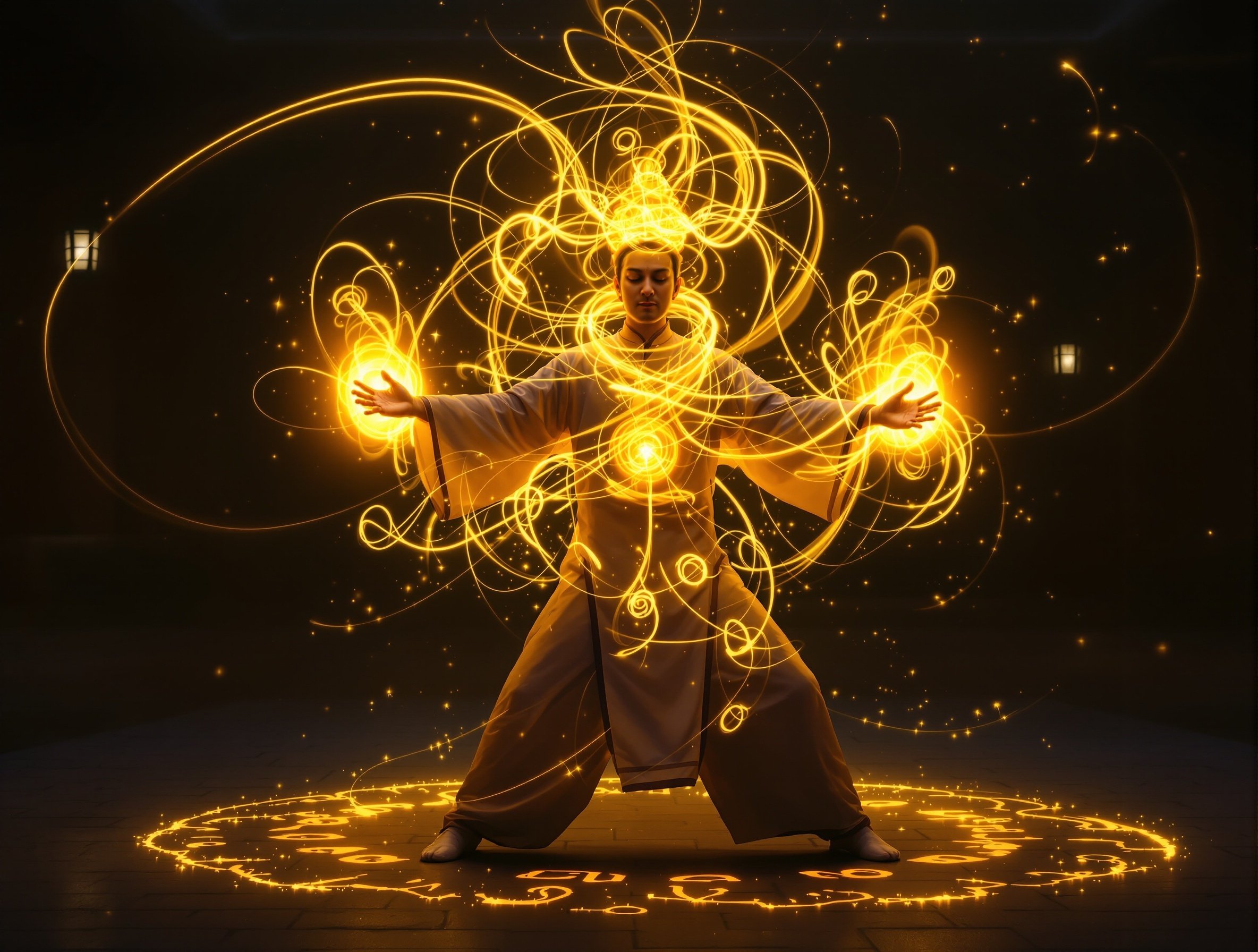
A comprehensive curriculum of traditional Taoist practices for cultivating, balancing, and circulating life force energy (Qi), integrating the physical body with energetic structures for health, martial skill, and spiritual development.
Current Training Status
Due to ongoing rehabilitation from spinal injuries, training is currently limited to private students and small groups. These ancient arts continue to play a vital role in maintaining mobility and supporting the healing process.
Personal instruction is available for serious students committed to traditional training methods. The curriculum can be adapted to individual needs, whether focusing on martial skill, health cultivation, or spiritual development.
Begin Here
Foundational Practices
The basics of cultivating, balancing, and circulating life force energy (Qi).
Inner Smile
A meditation connecting with internal organs, transforming negative emotions into positive virtues through directed awareness and loving intention.
Iron Hand Conditioning
Beyond structural conditioning, this practice releases the hand's potential to emit and receive energy, nourishing bone and circulation, stimulating the twelve meridian channels, grounding the practitioner whilst enhancing awareness of the energetic body.
Six Healing Sounds
Specific vocalisations and postures designed to release trapped heat and negative emotional toxins from the major organs, restoring natural balance.
Small Heavenly Cycle
Circulating energy through the functional (Ren) and governor (Du) channels of the torso to build a reservoir of Qi for health and spiritual development.
Chi Self-Massage
Techniques for rejuvenating the senses and skin by directing energy to the head and face, awakening the sensory organs and clearing stagnation.
Tien Gunn
A set of 25 bridging exercises harmonising external and internal connections, building whole body awareness and enhancing overall health.
Qi Cultivation
Internal Energy & Physical Health
Practices integrating the physical body with energetic structures.
Iron Shirt Chi Kung
Exercises for strengthening the internal organs, rooting to the earth, and developing a "body of steel" through condensing breathing and structural alignment.
Dantien Chi Kung
Building power in the lower abdomen (the "Second Brain") to enhance grounding, stability, and the body's central energy reservoir.
Daoyin Chi Kung
A simplified Tai Chi form focused on moving meditation and the flow of Qi rather than combat applications, ideal for health cultivation.
Bone Marrow Nei Kung
Cleansing and rejuvenating the bone marrow to strengthen the immune system and skeletal structure, working at the deepest level of the body.
Deeper Practice
Inner Alchemy
Fusion and beyond - advanced practices for transforming and refining internal energy.
Large Heavenly Cycle
Advanced meditation aimed at transforming and refining internal energy by leading it through additional energetic circuits in the body.
Fusion of the Five Elements
Formulas for "fusing" emotional energies into a neutralized pearl of energy to circulate through the body's extraordinary channels.
Kan and Li
Lesser, Greater, Greatest
The "Steam and Water" meditations used to invert the natural flow of energy, "cooking" the essence to birth a spiritual body.
Sealing of the Five Senses
Advanced internal work to prevent the leakage of energy through the sensory organs, preserving vitality for spiritual cultivation.
Healing Arts
Chi Nei Tsang - A specialized branch focused on physical bodywork.
Chi Nei Tsang
Internal organ massage primarily focused on the navel area to release energetic blockages. Includes techniques for releasing "trapped winds" (stagnant energy) that cause pain and illness, restoring the natural flow of Qi through the organs.
Sexual Alchemy
Healing Love - Practices for conserving and refining sexual energy.
Cultivating Sexual Energy
Techniques such as "Testicular/Ovarian Breathing" and "The Big Draw" to circulate Jing (essence) and prevent depletion. These practices conserve and refine sexual energy for health and spiritual growth, transforming the most potent force in the body.
The Inner Work
For committed students, the path opens quietly into deeper contemplative study, East and West. These are shared in person rather than described in full here.
Eastern Contemplative Studies
The Inner Taoist Tradition
Beyond the health and martial sides of Taoist practice lies quieter, more contemplative work. It is shared privately, in person, with students who have built solid foundations.
The Deeper Work
The classical tradition holds teachings that reach past the physical body toward stillness, clarity, and the refining of spirit. These are passed on slowly and only when the groundwork is sound. We say little about them in public, and much in the training hall.
Symbol and Meaning
Students come to understand the cosmological ideas that sit underneath Taoist practice, along with the traditional use of symbol and form. The emphasis is on patience, understanding, and respect for the lineage rather than spectacle.
Western Contemplative Studies
The Hermetic Thread
A companion study that draws on the older contemplative traditions of the West, offered quietly alongside the Eastern work for those who feel drawn to it.
Philosophical Grounding
Grounding in the roots of the Western tradition, including the doctrine of correspondences and the contemplative disciplines that shaped it. The aim is genuine understanding, not showmanship.
A Private Path
This material is not taught openly. It is shared one to one, over time, with students whose commitment and character are known. Those who feel called to it are welcome to raise it in person.
This work is offered only to established students, in person, once the foundations are set.
Private Instruction
Training is available through private lessons and small group sessions. Each student's curriculum is tailored to their goals, physical condition, and level of experience. Whether seeking martial proficiency, health cultivation, or spiritual development, instruction is adapted to meet your needs.
Located in the Scottish Highlands, with options for in-person and remote instruction.
Inquire About Training